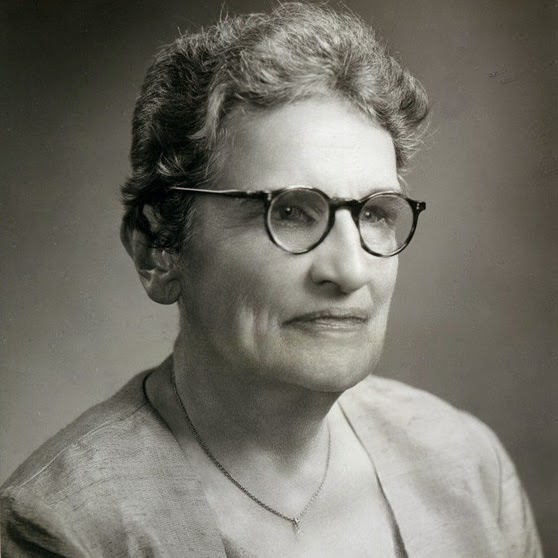
Teacher Helena Devereux: A Champion for Special Needs Students

71835[1]Special education teachers are no doubt aware of a very remarkable teacher who has contributed much to their field of endeavor. That teacher is Helena Devereux.

Helena was born on February 2, 1885, in Philadelphia, Pennsylvania. Like many young American women of her generation, she became a schoolteacher. She graduated first from Philadelphia High School for Girls in 1904, and then from the Philadelphia Normal School in 1906.

After her college graduation, Helena accepted her first position as a teacher at George Washington Elementary School in the Philadelphia public school system. As a novice elementary teacher working in an underprivileged area of the city, Helena immediately became interested in the children who experienced difficulty in learning through traditional methods. The public school system of her day had no means of providing individualized programs for children with special needs. Rather than helping these students, such children were repeatedly held back, ostracized by their peers, and written off as hopeless. Some were actually sent to mental institutions. Helena showed unique patience and attention to these special needs children. Several such children who had been held back and failed in other classes began to thrive under Helena’s expert care and innovative teaching methods.

Helena began using an individualized approach to the teaching of the developmentally delayed. She believed that each child in her care came complete with his or her own set of innate abilities, distinctive potential, and unique needs. She made it her purpose to aid them in the discovery that each one could be a contributing and valued member of their community and of a larger society. Her methods were groundbreaking, and they pre-dated many of the practices in the field of special education that are typically in use today.

In 1911, the Philadelphia Board of Education offered this remarkable teacher the job of Director of Special Education, a new position designed to supervise the creation of a special education department for the city’s schools. Despite being offered a handsome salary for the time, she turned it down, believing that she could have a greater impact on her own. That same year, Helena received national attention following a visit to her classroom from a reporter who published an article detailing her innovative instructional methods. Following the publication of this article, Helena was contacted by a parent in South Carolina who was interested in entrusting her challenged son to Helena’s care. Helena agreed to assume responsibility for the boy during the summer, and that child became Helena’s first private school student. When Helena received offers from other parents of children with special needs, she responded to these requests by renting a six-bedroom home in Avalon, New Jersey, which she converted to a private school designed to teach and care for the eight children.

In 1924, the gifted teacher Helena married James Fentress, the widower of one of her friends. The couple were married for 21 years, but during all that time, Helena remained dedicated to the students she served. This chalkboard champion passed away on November 17, 1975, at her home in Devon, Pennsylvania, at the age of 90.

Isabelle Salmon Ross: A Pioneer Settler and Pioneer of Physical Education for Women and Special Education Students

22650468_132448519446[1]

Many wonderful teachers were also pioneers in their time. Such is the case of Isabelle Salmon Ross, who was not only a pioneer settler in the Utah Territory in the 1800s, but was also a pioneer of physical education courses for women and special education students during her lifetime.

Isabelle Salmon was born on November 1, 1867, in Perry, Utah Territory. Her parents, William Weir Salmon and Margaret Hay Hunter Salmon, had immigrated from Scotland. Isabelle earned her degree in education at the University of Utah and also attended Harvard University. She became a physical education teacher in the public school system in Salt Lake City, at Brigham Young College, and at the Utah State School for the Deaf and the Blind in Ogden, Utah.

Isabelle was a member of the Church of Jesus Christ of Latter-Day Saints. She served her church in the general presidency of the Primary organization. While working in that capacity, Isabelle met and fell in love with fellow Mormon Charles James Ross. On September 29, 1897, the pair married in the Salt Lake Temple. Her husband was from Ogden and was a member of the general board of the Deseret Sunday School Union. He also served for a time as the manager of Ogden Tabernacle Choir.

In her later life, Isabelle suffered from coronary heart disease, and passed away at the age of eighty on December 28, 1947, in Salt Lake City. She is interred at the Salt Lake City Cemetery.

Former Special Education Teacher Kate Capshaw: She is Not Doomed!

Kate-Capshaw-9542150-1-402[1]Many talented educators have made their mark in fields other than education. This is certainly true of former teacher Kate Capshaw, a Hollywood actress who is best known for her portrayal of Willie Scott in the movie Indiana Jones and the Temple of Doom. She is also married to famed director Steven Spielberg.

Kate was born on November 3, 1953, in Fort Worth, Texas, of humble origins. Her mother was a travel agent and beautician, and her father was an airline employee. When Kate was only five years old, her family moved to St. Louis, Missouri, where in 1972 she graduated from Hazelwood Central High School.

After her high school graduation, Kate earned a bachelor’s degree in history education and a master’s degree in special education, both from the University of Missouri. She accepted her first teaching position as a special education teacher at Southern Boone County High School in Ashland, Missouri. Later she transferred to Rock Bridge High School in Columbia, Missouri. During her years as an educator, she married and divorced Robert Capshaw, a school principal. The union produced one daughter.

After some years in the classroom, Kate moved to New York City to pursue a career in acting, landing her first role on the soap opera The Edge of Night. She also starred in Dreamscape in 1984, SpaceCamp in 1996 and How to Make an American Quilt in 1995. During the filming of Indiana Jones, Kate began a relationship with Spielberg, which eventually resulted in her conversion to Judaism and their marriage in 1991. The couple have five children in addition to Kate’s daughter from her first marriage.


Beyond the Miracle Worker: The Story of Chalkboard Champion Anne Sullivan Macy

5046[1]The Miracle Worker by William Gibson is an iconic piece of American literature that is frequently taught in public schools. Exploring the extraordinary work of teacher Anne Sullivan Macy and her work with deaf and blind student Helen Keller, this award-winning play depicts the exact moment at which, due to Anne’s intensive instructional efforts, Helen was able to grasp the concept of language. This knowledge unlocked a world of isolation for the little girl, allowing her to connect with her fellow human beings, and making it possible for her to eventually earn a university degree at a time when educating women was rare. The scene is sweet. Yet the fifty-year relationship between the teacher and her student was riddled with ambiguity and complexity, as author Kim E. Nielsen demonstrates in her in-depth biography of Anne, Beyond the Miracle Worker: The Remarkable Life of Anne Sullivan Macy and Her Extraordinary Friendship with Helen Keller, published in 2009. The book is a fascinating read for anyone who wants to know more about this remarkable teacher and the instructional strategies she used that were so unique. You can discover more about this book on amazon.com at the following link:

Beyond the Miracle Worker

I have also included an abbreviated but concise biography of this amazing teacher in my book, Chalkboard Champions, which can also be found at amazon.com at the following link:

Chalkboard Champions

Anne Sullivan Macy: The Strategies She Used to Achieve Helen Keller’s Miracle

$RDT5O7NAlmost everyone has heard of Anne Sullivan Macy, the remarkable teacher who worked with Helen Keller, an extremely intelligent blind and deaf child from Tuscumbia, Alabama. The relationship between the teacher and the student is explored in The Miracle Worker by William Gibson, an iconic piece of American literature that is frequently taught in public schools. This award-winning play depicts the exact moment at which, due to Anne’s expert instructional efforts, Helen was able to grasp the concept of language. This knowledge unlocked a world of isolation for the little girl, allowing her to connect with her fellow human beings, and making it possible for her to earn a university degree at a time when educating women was rare. The scene is sweet. But what strategies, exactly, did the miracle-working teacher use in order to achieve this breakthrough? After extensive reading on the subject, I think I may be able to identify a few of them.

First of all, Anne read every bit of published material available in her day about the education of handicapped students. Knowledge of pedagogy is the first step to effective practice. In addition to this, Anne had the “advantage” of personal experience, as she herself had wrestled with severe vision impairment as a result of trachoma. I’m sure at one time or another, we’ve all met an educator who is particularly effective at working with students who are facing the same challenges the teacher himself faced as a youngster.

Second, Anne was a keen observer, and she made it a point to watch the normal processes of language acquisition. She then replicated those processes as best she could to fit the particular circumstances and needs of her student. Today, we would probably call this strategy recognizing brain-based learning, and coordinating teaching strategies to fit the way the brain naturally learns. Also, experts generally agree that much of Anne’s success in teaching Helen language was attributed to the fact that the teacher always communicated to her student with complete sentences. Concrete nouns such as water or spoon, verbs such was pump or run, or adjectives such as hot or smooth,  may be easy to convey. But abstract ideas such as beauty or truth, or certain parts of speech such as pronouns and some prepositions are much more difficult to impart to an individual unable to see or hear.

Third, Anne was especially adept at incorporating experiential learning into her lesson plans. The effectiveness of “learning by doing” has been well documented, but in a day and age when most instruction consisted of rote memorization without necessarily comprehending, Anne’s insistence on teaching through constructed experience was truly innovative. Wading through the creek water, climbing the tree, holding the chick as it hatched from the egg—experiences like these were the staples of Anne’s instructional program.

I have included an abbreviated but concise biography of this amazing teacher in my book, Chalkboard Champions, which can also be found at amazon.com at the following link: Chalkboard Champions.